Have You Planned for When the Plan Goes to Sh*t?
A few weeks ago, Daniel and I launched our kayak onto the Willamette River at sunrise with what felt like a solid plan.
150 miles down the Willamette with fast-ish current and zero transitions. Meaning, no stops whatsoever. The entire time, we would be in the boat, like a non stop floatila/ bullet train.
The estimated time, if all went perfectly and the flow stayed predictable was 15 ish hours.
Long day? Absolutely. But totally manageable, especially when you compare it to what we will be doing in a few months: The Yukon 1000, which will be 1000 miles total down the Yukon river in Alaska.
For the most part, we had the pacing figured out: don't stop. The calories figured out: drink 12 hours of 4 Hour Fuel + one or two smoothies. The hydration figured out: drink a full 3L bladder and then some. Everything was built around the fifteen hour mark. And maybe a little more if things got weird.
And then, of course, things got weird.
Somewhere around mile 120, we a hit long stretched of dead water with very slow-moving water. The river just stopped helping at all and the timing of it was almost comical. We had just gotten done talking very optimistically about our finishing time - "maybe we will just drive all the way home" and "wow, we are really making good time!" I even had the thought cross my mind that you never talk about the end until you can see it.. because you never know what could still happen. However with only thirty more miles to go, I thought we were safe.
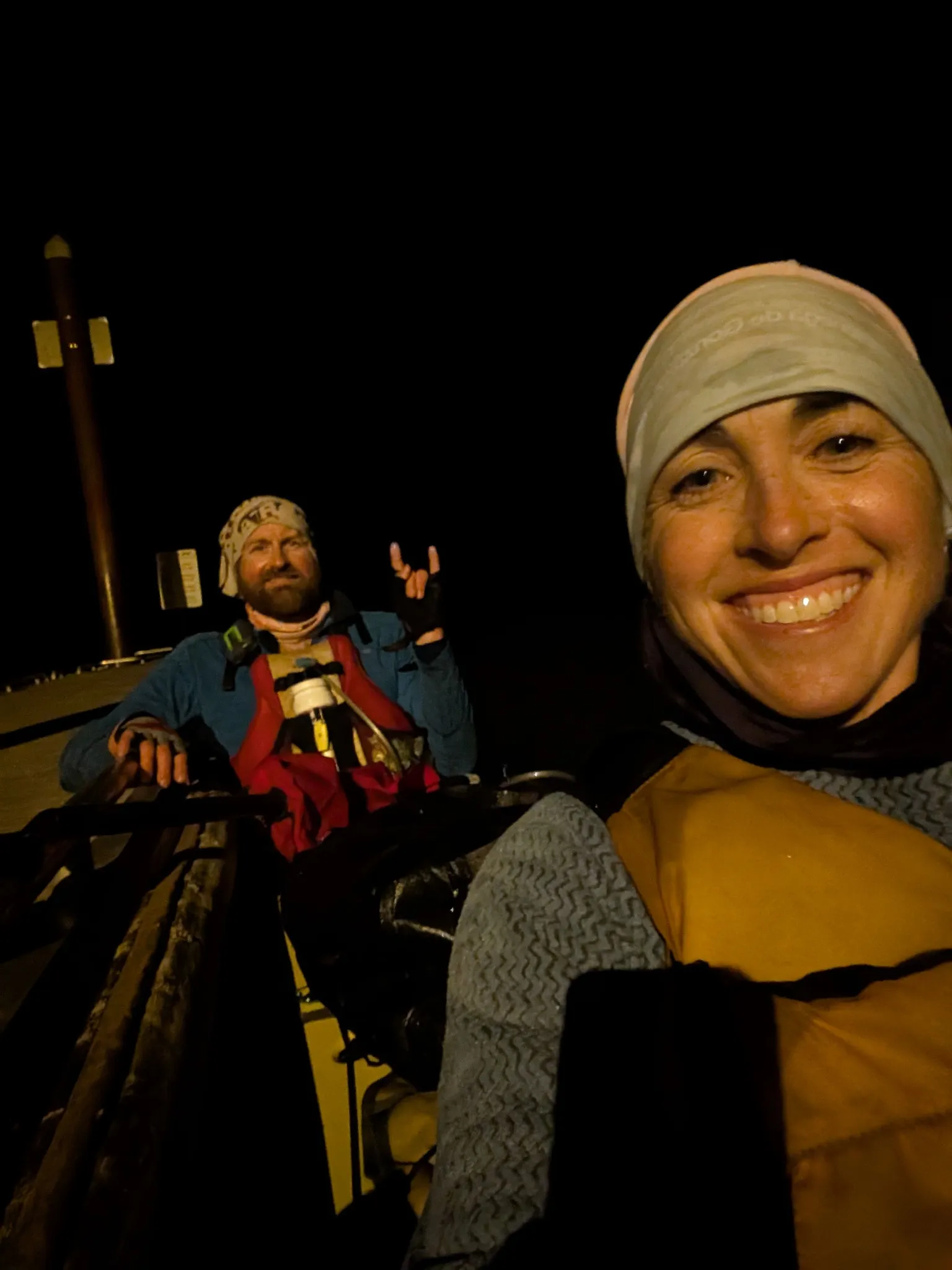
But we weren't. The river.. it just stopped helping at all. And with that also came total darkness, which makes everything a little slower.
In short, our pace dropped, the miles suddenly felt much longer and our math started changing.
Not dramatically at first, but enough to notice. Then enough that we stopped talking about if it would take longer and started talking about how much longer.
That’s the moment every endurance athlete knows very well. The moment the original plan quietly dies. This is the part people don’t talk about enough. Everyone loves talking about the perfect day:Ideal pacing, splits, conditions, and nutrition plan. But endurance sports rarely dish out an ideal day. They’re about the moment things drift away from ideal and whether you’re prepared to handle it.
By hour 12 or 13, the difference between a 15-hour effort and an 18-hour effort can be enormous if you have not planned for it. Not just physically but mentally too. Because suddenly your finish line moves, your calorie needs change, your hydration changes and your body starts asking different questions. And if you only planned for the best-case scenario, this is where the wheels come off.
Luckily, we didn’t just plan for 15 hours, we planned for 20. Not because we thought we’d need it, but because we knew we might.
That distinction matters.
We carried extra fuel specifically for the possibility that the river stopped cooperating, the pace slowed, the weather turned, or something unexpected happened. And when the day stretched from 15 hours toward 18, it stopped being about optimization and started being about stability and about continuing to move well instead of surviving the final hours.
This is something I think about constantly now—not just in racing, but in life and family adventures too. The “quick outing” that turns into an all-day mission, The hike that takes twice as long, the kid meltdown one mile from the car, the weather shift, the missed turn, the mechanical, the unexpected headwind, and the river that suddenly feels still.
Most people don’t fall apart because they aren’t strong enough, they fall apart because they planned for the perfect version of the day.
Good fueling isn’t about having just enough. It’s about having enough for when things go sideways.
Enough for the extra hours, and the moment morale drops and your body and mind start playing games with you.
That’s why we approach fueling differently now. It's not a precise equation, instead it's a margin, an insurance plan. And luckily thanks to 4HourFuel, it's so easy to through in an extra bag because it's both light and calorie dense.
When we finally reached the takeout after nearly 17 hours and 44 minutes on the water, I kept thinking about how different that finish would have felt if we’d only packed for 15. Those last few hours would have been survival, and sooo much slower.
Instead, we were still functioning, still making good decisions and still moving. Not comfortably (because what is comfortable after that many hours!?) but steadily. In the end, we got the paddle FKT on the Willamette 150 and no, we did not drive home. Instead we happily slept in the van at the take out till first light.
So here’s the question:
Are you fueling for the day you hope happens? Or the one that actually might?
Because eventually, if you spend enough time outside, racing, adventuring, parenting, exploring, pushing… The plan will go to sh*t.
And when it does, the people who keep moving usually aren’t the toughest.
They’re the ones who planned for that exact moment.
Want to know more about our paddle? Here are some articles on it:
Happy playing, adventuring and fueling!
Chelsey